When to Use AI (and When Not To)
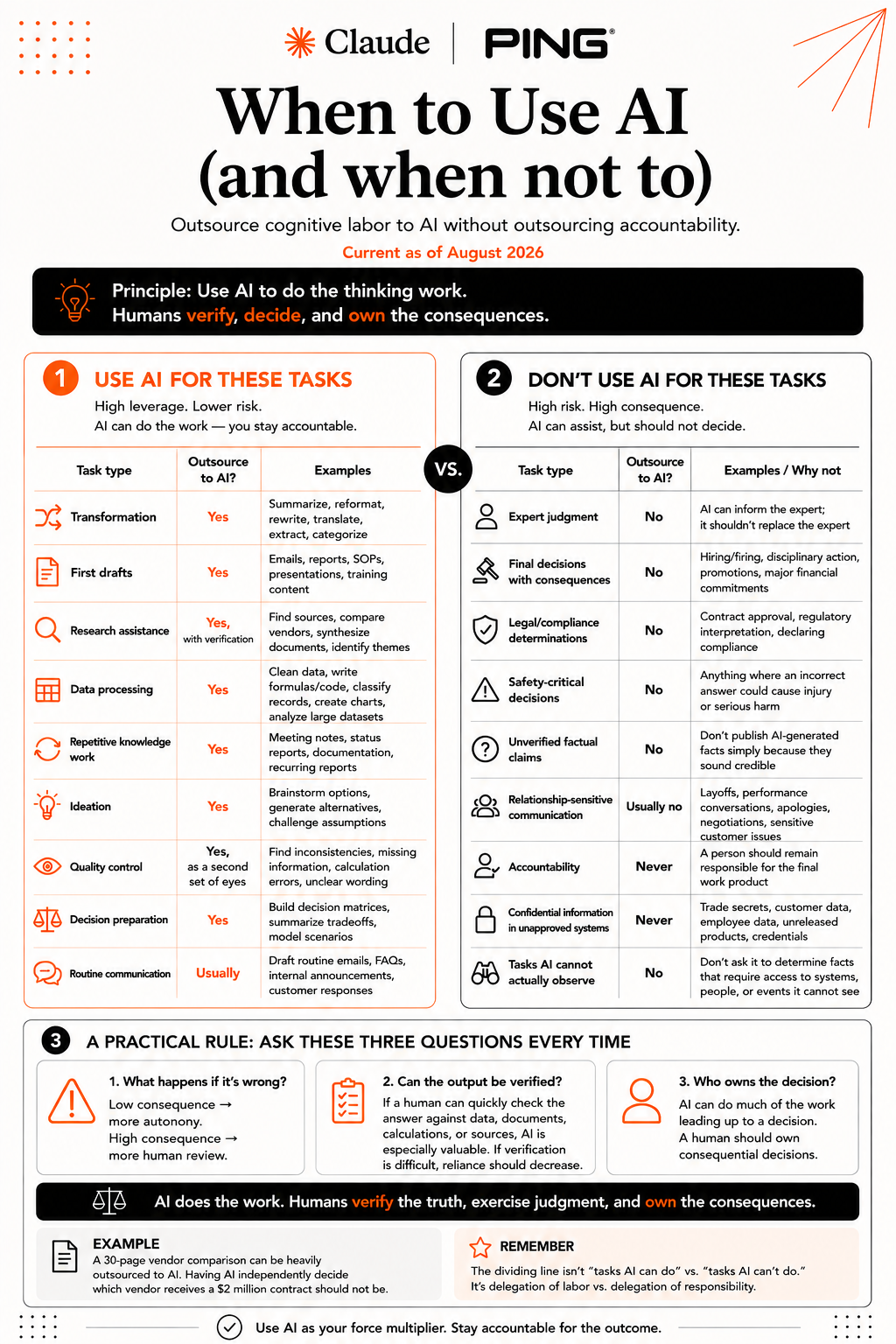
In plain English: this helps someone decide what cognitive work can be delegated to AI and where human judgment, verification, and accountability must stay in control.
One-page guide
Practical documents and reusable systems designed to help employees use AI more effectively, efficiently, and responsibly.
This section shows how I teach and scale AI usage. The first group is four one-page guides I created for everyday decisions: when AI should be used, which model and effort level to choose, how to save tokens, and how to improve AI writing and documentation. The second group shows how I turn good prompting practices into reusable team systems.
Each guide takes a common source of confusion and turns it into a visual, self-service decision employees can follow without additional coaching.
In plain English: this helps someone decide what cognitive work can be delegated to AI and where human judgment, verification, and accountability must stay in control.
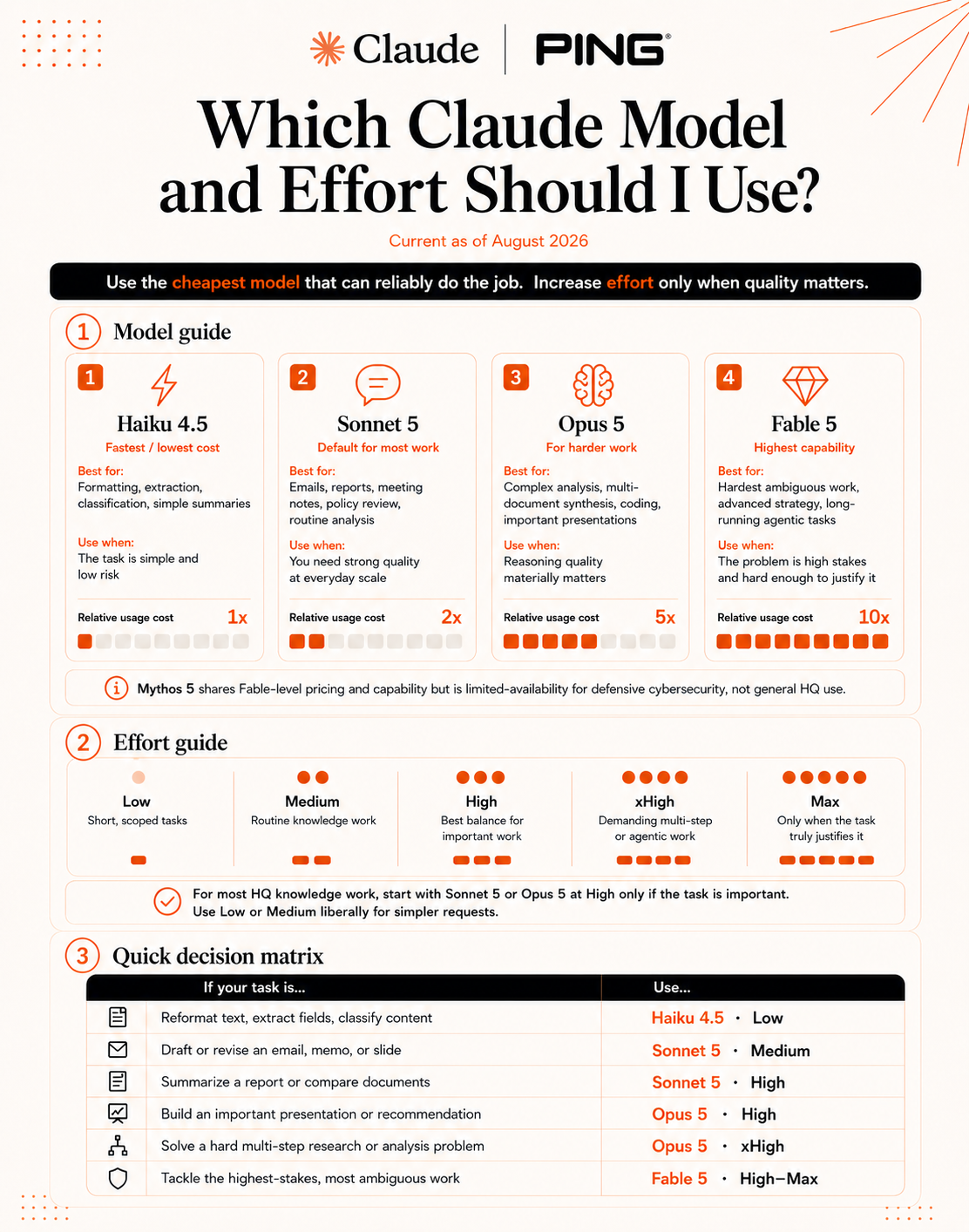
In plain English: this tells someone which Claude model and effort level to choose based on the difficulty, importance, and cost of the task.
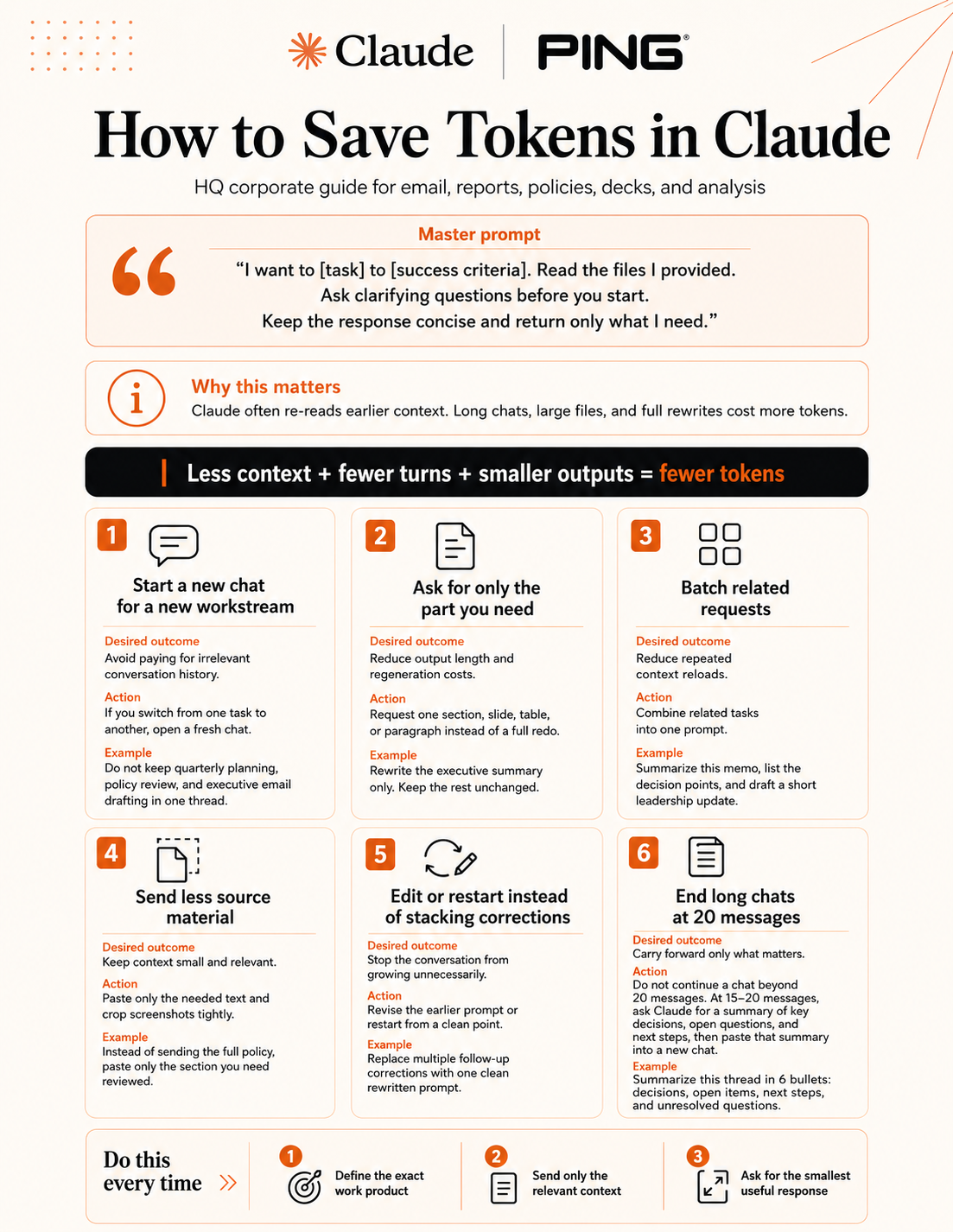
In plain English: this teaches users how to avoid wasting AI usage by keeping context small, asking for only what they need, batching related work, and restarting long threads.
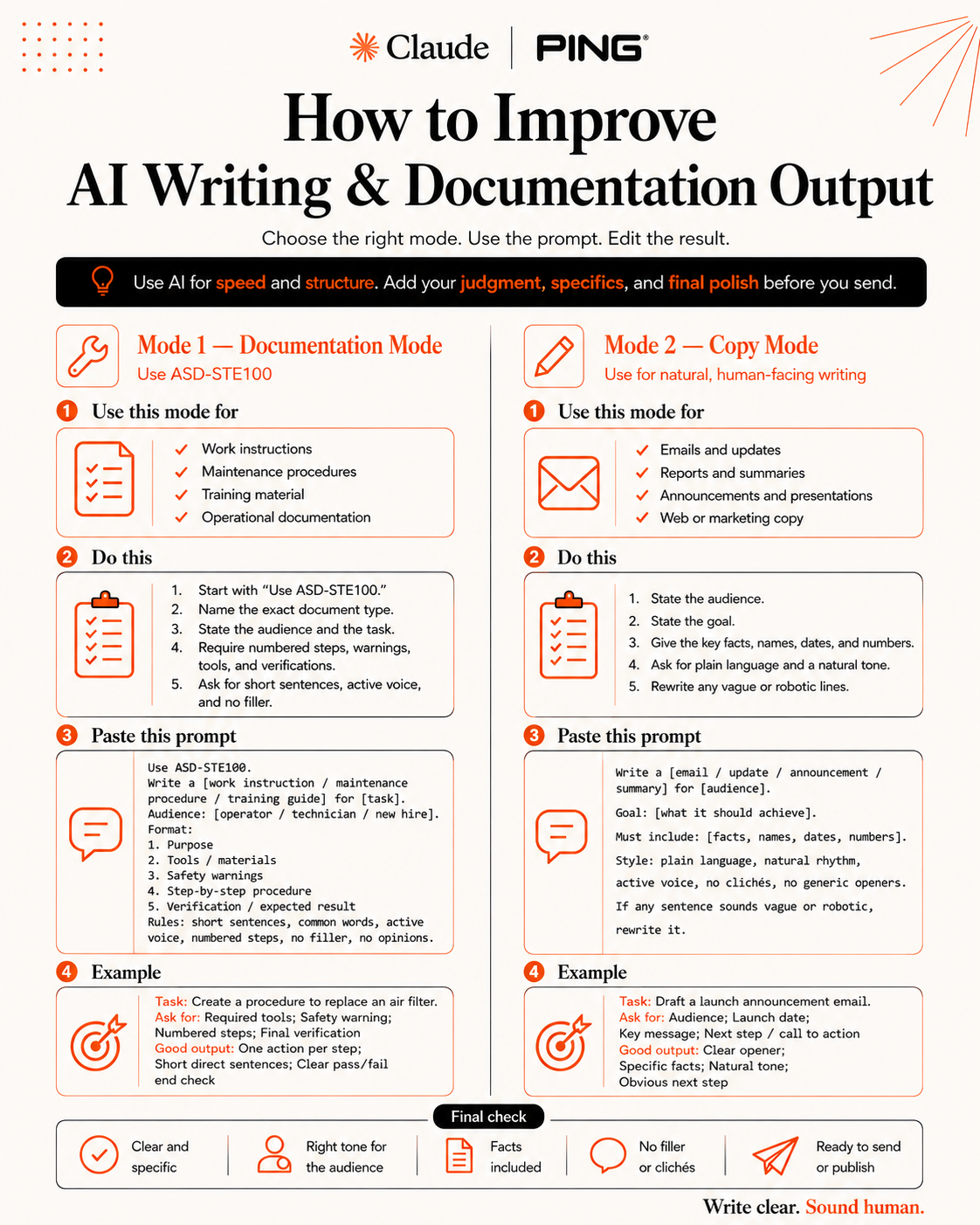
In plain English: this separates technical documentation from human-facing copy and gives users a repeatable way to prompt for each without generic AI filler.
The guides explain good behavior. Reusable system instructions and templates encode that behavior so people do not have to remember or recreate it every time.
In plain English: instead of teaching every employee how to write a perfect prompt, I store recurring standards, structure, formatting rules, terminology, and quality checks in reusable instructions and templates.